The Ultimate Guide to Sustainable Board Engagement
Is your organization struggling with board engagement? You’re not alone.
Often, after the initial excitement wears off, volunteer board members can lose steam. Key initiatives stall, and a few dedicated people are left carrying the weight, leading to burnout and missed opportunities.
The root cause is often a rush to find solutions before everyone truly agrees on the problem. To fix this, you need to empower your board by building a foundation of shared purpose.
💡
Key Takeaways
Align on Needs: Get clear on the "why" before the "what."
Foster Ownership: Empower your board to create their own solutions (”how”).
Celebrate Progress: Connect progress to each member’s “why.”
The Root Causes of Poor Board Engagement
Low board engagement rarely happens overnight. It's usually the result of a few common issues:
Jumping to Solutions: The board rushes into action plans before agreeing on the core needs they're trying to address. This leads to wasted effort on solutions that not everyone believes is the right approach.
Lack of Ownership: When plans are handed down from the top, board members don't feel a sense of personal responsibility. Without ownership, their commitment naturally fades.
Ignoring Personal Motivations: The work doesn't connect with what personally drives and inspires each member, making their involvement feel like just another obligation.
🪴
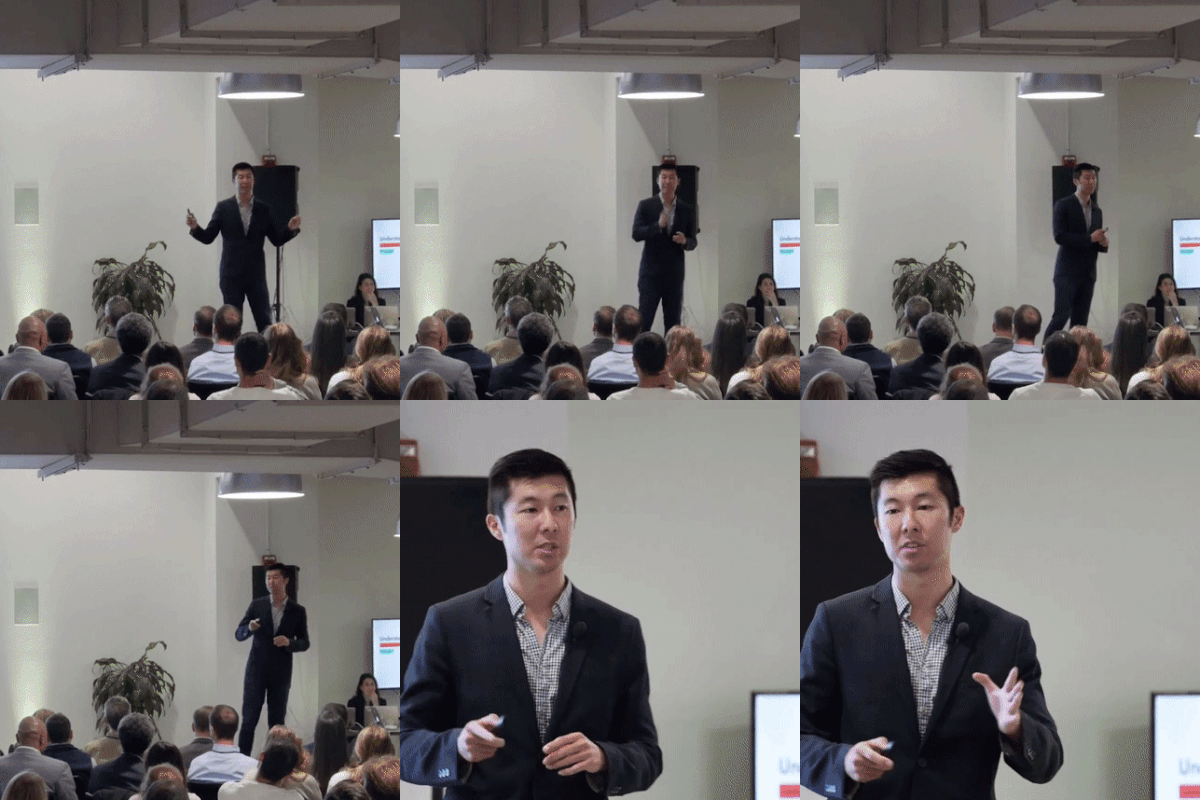
A Note From the Author (Dan Wu, JD/PhD)
As a former startup SVP of Product, I've lived the challenges this covers. I've used similar frameworks and tools to build and manage responsible, high-growth products generating 6-7 figures of annual revenue.
I help social impact leaders find who will buy, what to say, and what to sell, fusing Silicon Valley product thinking & Harvard PhD insight.
Three Strategies for Board Engagement
1) Align on Top Needs
What This Is: This is the process of getting your board to agree on the most critical problems or needs your organization faces before discussing any solutions. The goal is to build a shared understanding of the "why" behind the engagement. You can use our simple Needs Toolkit to brainstorm and then prioritize the needs with the highest impact potential.
Why It's Critical: Alignment is everything. When your board agrees on what's most important, it's far easier to find the right solutions and avoid wasting time on debates over mismatched priorities. This step ensures everyone is pulling in the same direction and prevent people from talking past each other.
Examples (Toggle for More)
Less Productive Example: You start a meeting by asking, "What should we do to raise more money?" Board members immediately start suggesting tactics like a gala, a new email campaign, and a corporate sponsorship program. The conversation is scattered, and no one can agree on a path forward because they haven't agreed on the core fundraising challenge.
More Productive Example:
You use the Needs Script in our toolkit to first facilitate a discussion with a core group to find what they believe are the most pressing needs.
Because the discussion generated many ideas, you then identify the top 3-5 needs using our Needs Scorecard. You then engage the entire board using our Needs Survey Template.
The survey reveals the top needs, with the #1 being: "We need to secure stable, multi-year funding to ensure program continuity." With a clear goal in mind, the subsequent brainstorming for solutions is focused and productive.
💡
Pro-Tip:Invite People In
These steps keep a few voices from taking over and ensure the brainstorm reflects everyone’s ideas:
During the discussion, kindly invite quieter members to share their thoughts (“Avery, would you mind sharing what you think?”).
You can also start with simple guidelines that remind everyone to notice how much they speak and to help include others.
2) Foster Ownership
What This Is: This strategy is about empowering your board to develop their own solutions to the needs you've identified. Instead of telling them what to do, you use our Action Toolkit to facilitate a process where they first define a measurable target, identify the top challenges to achieving it, and then create action plans for the top solution. The goal is to shift from a top-down approach to one where accountability comes from personal ownership.
Why It's Critical: People are more committed to ideas they help create. When board members own the solutions, their intrinsic motivation kicks in, and they are far more likely to follow through. This builds a stronger, more resilient board.
Examples (Toggle for More)
Less Productive Example: After a discussion, the Executive Director says, "Great ideas. I'll write up a plan and assign tasks to each of you for next month's meeting." The board members nod, but their engagement is passive, and follow-through is unlikely because they have no ownership of the plan.
More Productive Example:
You break the board into groups, each focused on a top need. With guidance and data from leadership, their first step is to set a clear, measurable target, such as "Secure $500k in new multi-year funding commitments by the end of next year."
With this target as their North Star, they then use the Solutions Scorecard from our Action Toolkit to identify the top challenges and rank the best solutions.
Finally, they use our Action Plan Template to define key steps, roles, and timelines. Because they built the plan themselves, starting with the target, they leave the room energized and with a clear sense of ownership.
💡
Pro-Tip:Mix Up the Groups
To create the most effective groups, don't let people self-select. Intentionally mix members based on things like:
Tenure: Blend seasoned members with newer ones for fresh perspectives.
Skills: Pair creative thinkers with organized, analytical members.
3) Celebrate Progress
What This Is: This involves understanding the personal "why" for each board member and then creating a consistent rhythm to publicly celebrate their progress. You can use our ProgressToolkit to gather insights into what inspires them, and then make their contributions visible and praiseworthy.
Why It's Critical: Volunteers are driven by passion and impact, not paychecks. If their work doesn't feel meaningful and tied to their “why,” their energy will fade. Celebrating small wins and showing how individual tasks connect to real impact closes the motivation loop and makes everyone feel like part of a winning team.
Examples (Toggle for More)
Less Productive Example: Board meetings are strictly business, following a rigid agenda of reports and financial updates. There's no time for sharing stories or personal reflections, and the meetings feel sterile and obligatory.
More Productive Example:
Before meetings, you have 1x1s with board members to assess how they’re feeling about their engagement, using our Board Motivation Script in our Progress Toolkit to figure out what matters most to them.
You start meetings with a five-minute "mission moment" sourced using our Impact Finder from our Progress Toolkit where you share how the organization’s work is directly impacting beneficiaries, tying stories directly to what matters most to your board members.
Finally, as part of a standing agenda item, you review a simple Commitments Tracker, celebrating what's been accomplished and offering support where needed. This creates a predictable rhythm of recognition and support.
Board Engagement: The Toolkit
This framework gives you the strategy. If you’re ready to put it into practice, we’ve built a set of powerful toolkits to help you execute each step with precision.
The Core Offer Checklist: A simple diagnostic to assess the drivers of a strong core offer to engage your target audience and clarify your blind spots.
The Needs Toolkit: This toolkit is designed to help you align your board on what matters most. It provides a structured process to move from broad brainstorming to a clear, prioritized list of the core needs your organization must address, ensuring everyone starts on the same page.
The Action Toolkit: This toolkit empowers your board to take ownership of the solutions. It guides them through setting measurable targets, identifying and ranking solutions, and building a concrete action plan with clear roles and timelines.
The Progress Toolkit: This toolkit helps you create a sustainable rhythm of motivation and accountability. It provides tools to understand what drives your board members and a system to make their contributions and your organization's impact visible and celebrated.
👉 Want the Tools Mentioned Above?
Start with our free checklist to get on the path to the rest.
Frequently Asked Questions About Board Engagement
How do you keep board members engaged?
Keep board members engaged by connecting their work to the mission, giving them meaningful ownership over projects, clearly communicating expectations, and recognizing their contributions. Building strong personal relationships between board members also fosters a sense of team and shared purpose.
What if someone does not want to be engaged?
First recognize that not every board member will be a good fit for a more engaged, high-ownership culture. It means having a clear process for recruiting the right members and, when necessary, managing the transition of those who are consistently disengaged (eg: private 1x1 conversation and then a respectful transition process to a better fitting role). A small group of highly motivated people can achieve more than a large, disengaged one. Protecting your culture of engagement is crucial. Allowing chronic disengagement to persist can demotivate your most dedicated members and poison the group's dynamic.
When should you not use these board engagement strategies?
While these strategies are powerful, they may not be the right fit in a crisis. If your organization is facing an immediate, urgent threat (like a sudden financial shortfall), you may need a more top-down, directive approach from the Executive Director or board chair to make quick, decisive actions. Empowerment and consensus-building take time, which you may not have in an emergency.
Dan Wu, JD/PhD Lead Innovation Advisor
I build and advise mission-driven ventures to scale like startups.
SVP of Product & Chief Strategy Officer.
As a go-to-market-focused product leader, I’ve led and launched products and teams at tech startups in highly-regulated domains, ranging from 6 to 8 figures in revenue.
Led core products and product marketing key to pre-seed to D raises across highly-regulated industries such as data/AI governance, real estate, & fintech; rebuilt buyer journeys to triple conversion rates; Won Toyota’s national startup competition.
Harvard JD/PhD focused on responsible innovation for basic needs.
Focus on cross-sector social capital formation, with a strong background in mixed-methods research.
Dan Wu is our Lead Innovation Advisor focused on helping leaders build safe, high-growth products. As an SVP of Product & Chief Strategy Officer, he has led and managed products to achieve 6 to 8 figures in revenue. His work is informed by his background as a Harvard JD/PhD, where he focused on responsible innovation, social networks, and mixed-methods research.


 Made with Bullet